Disclosure and Barring Service
Barring Service
Featured
DBS prepares to host Spring Conference 2024
News story
DBS prepares to host a free, virtual conference featuring a range of expert speakers sharing insights to support better safeguarding decision-making.
To coincide with the launch of the Home Office Stop! Think Fraud campaign, the Disclosure & Barring Service is providing support to job seekers for a safer employment search.

DBS - key moments and milestones of 2023
News story
The Disclosure and Barring Service reflects upon some significant achievements in 2023.

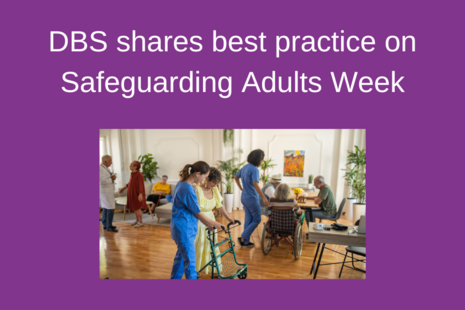
DBS is marking Safeguarding Adults Week to highlight its critical role in helping keep vulnerable adults in the care sector safe.
Changes to the Rehabilitation of Offenders Act 1974 implemented by DBS.
Fel rhan o Wythnos Genedlaethol Diogelu yng Nghymru, mae’r Gwasanaeth Datgelu a Gwahardd (DBS) yn darparu ei arbenigedd i gefnogi sefydliadau i wneud penderfyniadau recriwtio mwy diogel.

Latest from the Disclosure and Barring Service
What we do
The Disclosure and Barring Service helps employers make safer recruitment decisions.
DBS is an executive non-departmental public body, sponsored by the Home Office.
Follow us
Documents
Transparency and freedom of information releases
Our management














Contact DBS
DBS disclosure service
PO Box 3961
Royal Wootton Bassett
SN4 4HF
United Kingdom
DBS helpline
03000 200 190
Minicom
03000 200 192
Welsh
03000 200 191
International
+44151 676 9390
Our current opening hours are 09:00 to 17:00, Monday to Friday.
The Disclosure and Barring Service webchat is available Monday to Friday from 09:00 to 17:00. The webchat is available to answer general customer queries.
If emailing us, please provide 5 pieces of information, this must include:
• Full name
• Address declared on the application form (including house number and postcode)
• Date of birth
And two of the below:
• DBS Application reference number
• National Insurance Number
• Position applied for
• Employer Name
• Place of Birth (town/city and country)
• DBS certificate reference number
• Passport Number
• Driving Licence number
• Previous address
In addition to the above, Registered Bodies will also need to provide their ‘Registered Body reference number’ and ‘Countersignatory reference number’ to confirm their identity.
You may be asked some security questions to verify your identity. All calls to the above number are recorded for record keeping, training and quality assurance.
We cannot guarantee the security of information until it is in our possession, and will not take responsibility for such information until we receive it.
Go to the DBS online tracking service to check on the progress of an application. Tracking an application is much quicker online. The link to this service is available at the top of this homepage.
DBS certificate disputes
Liverpool
L69 3JD
United Kingdom
Telephone
03000 200 190
Contact us if you think your DBS certificate is wrong. This can include incorrect personal details, incorrect conviction information or other discrepancies. If you receive a DBS certificate with a conviction that doesn't relate to you, you should also inform the person who requested that you complete the form as soon as possible.
The phone line for certificate disputes is open 9am to 5pm, Monday to Friday only.
Sensitive applications
Customer services
PO Box 165
Liverpool
L69 3JD
United Kingdom
Sensitive applications team
0300 106 1452
Please note: Advisers who answer calls to the sensitive applications line cannot answer queries that do not relate to sensitive applications.
Transgender applicants are protected in legislation and are not obliged to include details indicating a previous gender in their application form.
DBS has a process in place which allows any details indicating a previous gender to be checked without being disclosed on the completed certificate.
They are, however, required by law to provide all name details to DBS in their current and any previous identity. Deliberately withholding this information may be an attempt to prevent conviction information being revealed and is an offence.
If emailing, we cannot guarantee the security of information until it is in our possession, and will not take responsibility for such information until we receive it.
DBS barring
PO Box 3963
Royal Wootton Bassett
SN4 4HH
United Kingdom
Telephone:
03000 200 190
We cannot guarantee the security of information until it is in our possession, and will not take responsibility for such information until we receive it. For this reason we recommend submitting referrals via our secure online referral form, however if you are using a paper referral form we recommend using registered post.
FOI requests
Policy Department
PO Box 165
Liverpool
L69 3JD
United Kingdom
If you wish to submit a new request under the Freedom of Information Act please contact the DBS.
Most requests are free of charge but you may need to pay a small amount for photocopies or postage. When you submit a request we'll let you know if you have to make a payment.
DBS legal services
Stephenson House
Alderman Best Way
Darlington
DL1 4WB
United Kingdom
Addresses for service of legal documents. Service is accepted by post or by email.
Make an FOI request
- Read about the Freedom of Information (FOI) Act and how to make a request.
- Check our previous releases to see if we’ve already answered your question.
Corporate information
Jobs and contracts
Read about the types of information we routinely publish in our Publication scheme. Find out about our commitment to publishing in Welsh. Our Personal information charter explains how we treat your personal information. Read our policy on Social media use.